
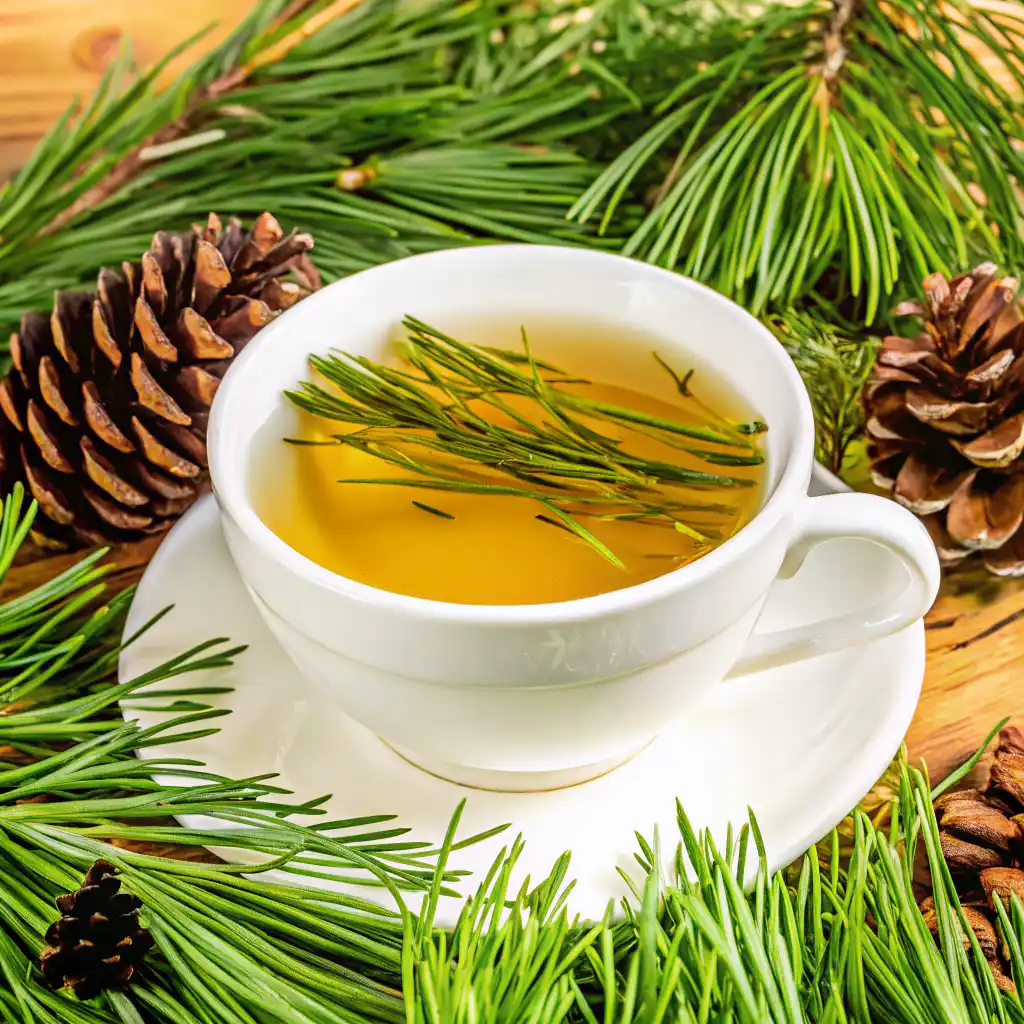
Pine needle tea is one of the simplest wild-foraged drinks you can make at home. Steep a handful of fresh pine needles in hot water, and within ten minutes you have a fragrant, forest-scented cup with a clean, slightly citrusy flavour that feels nothing like the commercial herbal teas most people are used to.
It has been brewed for centuries across Indigenous North American, Scandinavian, and East Asian traditions, and it requires nothing more than a tree, a kettle, and a few minutes of patience. There is something genuinely appealing about that simplicity, which is likely why interest in it keeps growing every winter.
This guide covers everything you need to know: what it tastes like, the benefits people associate with it, a straightforward recipe, and, most importantly, the safety information you need before you brew your first cup. Species identification matters here, and we will explain exactly why.
Table of Contents
What Is Pine Needle Tea?
Pine needle tea is an herbal infusion made by steeping the fresh, young needles of pine trees in hot water. Unlike commercial teas, it contains no tea plant (Camellia sinensis), which means it is naturally caffeine-free and falls into the broader category of tisanes or herbal infusions.
The tradition of using pine needles as a beverage and wellness ingredient has roots in many cultures. Indigenous peoples across North America, including the Ojibwe and Haudenosaunee nations, brewed pine needle infusions long before European contact. In Scandinavia and parts of Northern Europe, pine was similarly used in folk traditions to support health during harsh winters when fresh plant foods were scarce. In Korea and Japan, certain pine preparations have been part of traditional herbal practice for generations.
Today, people drink pine needle tea primarily for three reasons: the distinctive taste, the appeal of a natural and caffeine-free warm drink, and a general interest in traditional or foraged beverages. It fits well into the broader trend toward simpler, whole-food-based wellness habits.
For a deeper look at its historical context and traditional uses, Wikipedia’s entry on pine needle tea provides a well-sourced overview.
What Does Pine Needle Tea Taste Like?
The flavour surprises most first-time drinkers. It is not the sharp, medicinal pine smell you might associate with cleaning products. Steeped gently in hot water, pine needles produce a clean, mildly resinous flavour with noticeable citrus undertones, a light bitterness, and a fresh, almost minty finish.
Compared to standard herbal teas, it is less floral than chamomile, less earthy than nettle, and much lighter than a strong peppermint infusion. The closest natural comparison is a very mild green tea with a subtle piney, outdoor quality. Some people describe it as tasting like fresh air, which sounds vague but is actually quite accurate.
The species you use affects the flavour meaningfully. Eastern white pine (Pinus strobus) produces one of the mildest, most pleasant infusions with clear citrus notes. Other safe species can lean slightly more resinous or bitter depending on the tree and the season.
Young needles, harvested in spring or early summer, tend to taste brighter and more citrusy. Older, darker needles from the same tree have a stronger, more resinous quality. Both work, but new growth makes the most approachable cup for beginners.
A squeeze of fresh lemon and a small amount of honey transform the drink considerably. The lemon amplifies the natural citrus notes already present in the needles, and honey adds enough sweetness to round off any bitterness. This combination is the most common way to serve it and the version most beginners find most approachable.
Pine Needle Tea Benefits (What You Should Know)
Note: This is not medical advice. The following reflects general information about pine needle tea as a traditional herbal drink. Always consult a qualified healthcare professional before using any herbal preparation for health purposes.
Pine needle tea is primarily valued as a traditional, natural beverage rather than a therapeutic treatment. Here is what people commonly appreciate about it:
A caffeine-free warm drink. For people who are sensitive to caffeine, reducing their coffee intake, or simply looking for a warm evening drink that will not disrupt sleep, pine needle tea offers a genuinely pleasant alternative. Unlike many caffeine-free herbal teas, its flavour is distinctive enough to feel interesting rather than bland.
A natural and minimally processed option. Pine needle tea involves no processing, no additives, and no supply chain between the ingredient and your cup. For people drawn to foraged or whole-food beverages, that directness has real appeal.
A relaxing ritual. The act of preparing a foraged tea, from selecting fresh needles to steeping and straining, creates a slow, intentional routine. Many people find this kind of gentle, sensory ritual genuinely calming, regardless of any specific botanical effect.
Hydration support. Like any warm herbal infusion, pine needle tea contributes to daily fluid intake. For people who find plain water unappealing, flavourful herbal teas including this one can make it easier to stay adequately hydrated.
Traditional seasonal use. Historically, pine was used during winter months in part because fresh plant material was scarce. Today, that seasonal connection still resonates for people who enjoy a warming, forest-scented drink during colder months as a kind of cold-weather ritual.
Is Pine Needle Tea Safe to Drink? (Important)
This is the most important section in this article, and it deserves careful reading. Pine needle tea can be safe and enjoyable when made from the correct species. It can also be harmful when made from the wrong ones. The difference lies entirely in species identification.
The short answer: yes, pine needle tea is safe when prepared from correctly identified, edible pine species, steeped gently rather than boiled aggressively, and consumed in moderate amounts by healthy adults who are not pregnant.
The more complete answer involves understanding which species to use and which to avoid.
Can You Use Any Pine Needles?
No. Not all pine needles, and not all trees commonly called pines, are suitable for making tea. This is the single most important fact to understand before foraging.
Safe species (most commonly used):
- Eastern White Pine (Pinus strobus): the most recommended species for beginners in North America. Mild flavour, widely available, well-documented as safe for tea use.
- Scots Pine (Pinus sylvestris): commonly used in Europe, particularly in Scandinavian traditions.
- Lodgepole Pine (Pinus contorta): used traditionally in parts of western North America.
- Ponderosa Pine (Pinus ponderosa): safe in moderation and used historically.
Species to avoid entirely:
- Yew (Taxus species): technically not a true pine, but commonly confused with one. Extremely toxic. All parts of yew trees are poisonous, including the needles. This is not a risk to minimize; it is a hard rule.
- Norfolk Island Pine (Araucaria heterophylla): commonly kept as a houseplant, not a true pine, and not suitable for tea.
- Common Juniper (Juniperus communis): also not a true pine, and while used medicinally in very small quantities in some traditions, it is not appropriate as a daily tea.
- Ponderosa Pine needles from certain regions: there are documented concerns about Ponderosa Pine needles causing pregnancy complications in livestock. Avoid during pregnancy.
If you are not confident in your ability to identify pine species in your area, consult a local foraging guide or a botanist before harvesting. Photographs alone are not always sufficient for safe identification.
Is It Safe to Boil Pine Needles?
This is a reasonable question, and the answer is: it is better not to. Aggressive boiling of pine needles can break down some of the aromatic compounds and potentially concentrate resinous substances in ways that affect both flavour and tolerability. The result is a much more bitter, harsher drink that is harder on the stomach.
The recommended method is gentle steeping: heat water to just below boiling (around 85 to 90 degrees Celsius, or until small bubbles begin to form but before a full rolling boil), pour it over the needles, cover the vessel to trap volatile aromatics, and steep for 5 to 10 minutes. This produces the most pleasant flavour and is the approach used in most traditional preparations.
Boiling is not catastrophically dangerous for most healthy adults using safe species, but there is no benefit to it and some downside. Steep, do not boil.
How to Make Pine Needle Tea (Simple Recipe)
Once you have correctly identified your pine species, the recipe itself takes under fifteen minutes and requires no special equipment.
Ingredients
- A small handful of fresh pine needles (roughly 2 tablespoons once the brown sheaths are removed)
- 240 ml (1 cup) of filtered water
- Juice of 1/4 lemon (optional but recommended)
- 1 teaspoon of honey or a few drops of liquid stevia (optional)
On sourcing: Use fresh, green needles harvested away from roadsides, industrial areas, or treated land. Young needles from new spring growth have the best flavour. Rinse thoroughly before use regardless of where they were harvested.
Instructions
- Rinse the pine needles under cold running water. Remove and discard the brown papery sheath at the base of each needle bundle. The sheath can add bitterness.
- Roughly chop or bruise the needles slightly. You can use scissors or simply crush them gently between your fingers to help release their oils.
- Heat your water to approximately 85 to 90 degrees Celsius. If you do not have a thermometer, bring water to a full boil and then let it sit for 2 minutes.
- Place the needles in a heatproof cup or small teapot. Pour the hot water over them, not the other way around.
- Cover the cup with a small plate or lid to prevent volatile aromatic compounds from escaping with the steam.
- Steep for 5 to 10 minutes depending on how strong you prefer the flavour. Five minutes gives a lighter, more delicate result. Ten minutes produces something noticeably stronger and more resinous.
- Strain the needles out using a fine mesh strainer. Add lemon juice and honey if using. Drink while still warm.
Tips for the Best Flavour
Use fresh needles, not dried. Dried pine needles lose a significant portion of their aromatic compounds and produce a flat, woody infusion. Fresh, green needles are not negotiable if you want the full flavour experience.
Do not over-steep. Beyond ten minutes, the flavour tips from pleasantly resinous into genuinely bitter. Set a timer. If you accidentally over-steep, a little extra honey and a larger squeeze of lemon can rescue the cup.
Try it in spring for the brightest flavour. New needle growth in spring is notably brighter, greener, and more citrusy than the older growth. If you want to experience pine needle tea at its most approachable and pleasant, early spring is the ideal time to brew your first cup.
Cover the cup while steeping. This simple step makes a noticeable difference. The aromatic compounds responsible for the tea’s best qualities are volatile and escape with steam. A small plate over the top of the cup retains much more of that fresh pine character.
Lemon is not optional if you are new to it. The first cup of pine needle tea without any additions can catch people off guard. A small amount of fresh lemon juice dramatically improves palatability and makes the drink much more enjoyable for first-timers.
When and How to Drink Pine Needle Tea
Pine needle tea works at almost any point in the day, and its caffeine-free nature means timing is flexible. Here are the moments when most people find it fits most naturally.
Morning ritual (without the caffeine crash). For people who are reducing their coffee intake but still want a warm, intentional drink to start the morning, pine needle tea offers a grounding, fragrant alternative that feels purposeful rather than like a compromise.
Afternoon calm. The mid-afternoon period when energy dips is a natural moment for a warm, caffeine-free drink. Pine needle tea provides that warmth and sensory ritual without the sleep disruption that an afternoon coffee can cause.
Winter evenings. This is arguably the most natural fit. The forest scent, the warmth, and the simplicity of the preparation make it a genuinely appealing cold-weather drink. Paired with a small amount of honey, it becomes a genuinely comforting evening ritual.
Served cold in summer. Brew a slightly stronger batch, allow it to cool to room temperature, then refrigerate and serve over ice with extra lemon. The citrusy, clean quality of pine needle tea translates well to a cold format and makes an interesting, conversation-starting summer drink.
Start with one cup per day and see how your body responds, particularly in the first week. Some people find the resinous quality takes a little getting used to. There is no defined upper limit for healthy adults using safe species, but moderation is always sensible with any herbal preparation.
Related Herbal Drinks You May Like
If pine needle tea appeals to you because of its natural, caffeine-free simplicity, these guides on our site cover drinks with a similar philosophy and a comparable approach to using whole, minimally processed ingredients.
Our butterfly pea flower tea guide covers one of the most visually striking natural teas available, brewed from dried flowers with a vivid blue colour that shifts to purple with a splash of lemon juice. It is similarly caffeine-free, traditionally used in Southeast Asian herbal practice, and very easy to prepare at home.
For a warming, spiced alternative, our Sanjay Gupta chai tea recipe builds a deeply flavourful cup using whole spices. It is a good option for colder mornings when you want something with more body and complexity.
If you enjoy the ritual of a slow-brewed natural drink and are curious about the specific health properties attributed to different herbal preparations, our roasted barley tea guide explores a caffeine-free East Asian classic with a toasty, nutty profile that many people find even more accessible than pine needle tea for daily use.
And for cold months especially, the white pine needle tea benefits guide goes deeper on the specific properties of Pinus strobus, the most popular species for tea use in North America, and is a natural companion read to this article.
Curious how to make pine needle tea at home? See the full steps on Pinterest:
Drink Hot or Iced.
Frequently Asked Questions
What are the benefits of pine needle tea?
Pine needle tea is most appreciated as a natural, caffeine-free herbal drink with a distinctive fresh flavour. People drink it as a warming beverage during colder months, as a caffeine-free alternative to coffee or standard herbal teas, and as part of a simple wellness or foraging routine. It has traditional roots in North American Indigenous practice, Scandinavian folk use, and East Asian herbal tradition. As with all herbal infusions, it should not be treated as a substitute for medical care or used to treat specific health conditions.
Is it safe to drink tea from pine needles?
Pine needle tea is safe when brewed from correctly identified, edible pine species such as Eastern White Pine (Pinus strobus) or Scots Pine (Pinus sylvestris), and consumed in moderate amounts by healthy, non-pregnant adults. The most important safety consideration is species identification. Trees that are commonly mistaken for pines, including yew (Taxus species), can be extremely toxic. If you are not certain of your identification, do not brew. Pregnant people should avoid pine needle tea entirely, as certain species have been associated with pregnancy complications in animal studies.
Is it safe to boil pine needles for tea?
It is generally better to steep pine needles in hot water that is just below boiling rather than to boil them aggressively. Boiling can make the infusion more bitter and may alter the resinous compounds in the needles in ways that affect tolerability. The recommended approach is to heat water to around 85 to 90 degrees Celsius, pour it over the needles, cover, and steep for 5 to 10 minutes. This method produces the most pleasant flavour and is closer to traditional preparation methods.
Can you make tea out of any pine needles?
No. Not all pine trees and not all trees commonly referred to as pines produce needles that are safe for tea. Some species, particularly yew (which is often confused with pine), are toxic. Others, like Norfolk Island Pine, are not true pines and are not suitable for brewing. Always confirm species identification before use, and when in doubt, consult a local foraging expert or field guide.
Conclusion
Pine needle tea does not require any special equipment, any purchased ingredients, or any elaborate technique. It asks for a correctly identified pine tree, clean water, ten minutes, and a little attention to temperature. That simplicity is the point.
The flavour is genuinely pleasant once you know what to expect: clean, mildly resinous, with a natural citrusy brightness that works well with a little lemon and honey. The ritual of preparing something foraged from a local tree has a quality that most packaged teas cannot replicate.
The safety guidance in this article is not meant to discourage you. It is meant to make sure your first cup, and every cup after that, is a good one. Learn your species, keep the steep gentle, and start with one cup to see how you enjoy it.
If you are ready to try it: find your tree, rinse your needles, and put the kettle on.
More natural drink guides at JoyfulBiteRecipes.com
4 thoughts on “Pine Needle Tea: Simple Recipe, Benefits, and Safety Guide”